In today’s rapidly evolving scientific landscape, aspiring physicists face a unique set of challenges and opportunities. With breakthroughs in quantum computing and astrophysics making headlines, mastering the right foundational subjects is more crucial than ever.

Whether you’re aiming to unravel the mysteries of the universe or contribute to cutting-edge technology, focusing on key areas can make all the difference.
I’ve personally navigated this journey and discovered which topics truly pave the way for success. Let’s dive into the essential knowledge every budding physicist should prioritize to stay ahead in this exciting field.
Building a Mathematical Toolkit for Physics Mastery
Grasping the Language of Mathematics
Mathematics is often called the language of physics for a reason—it’s the tool through which abstract concepts become tangible. I remember when I first struggled with calculus; it felt like deciphering an alien code.
But once the fundamentals clicked, everything from motion to electromagnetism started making sense. Calculus, especially differential and integral calculus, helps you understand how physical quantities change and accumulate over time.
Without a solid grip on these, exploring advanced topics feels like trying to build a house on sand.
Linear Algebra and Its Surprising Applications
Linear algebra sometimes gets overlooked, but trust me, it’s a powerhouse in physics. From quantum mechanics to computer simulations, matrices and vector spaces are everywhere.
When I started working on quantum state problems, linear algebra was indispensable for handling complex systems. Mastering matrix operations and eigenvalues can transform your approach to physics problems, making them more manageable and intuitive.
Embracing Mathematical Rigor Through Problem Solving
Theory is important, but applying math through problem-solving is where real learning happens. I found that working through diverse problems not only reinforced concepts but also trained me to think critically and creatively.
Tackling problems involving differential equations or Fourier transforms might be tough initially, but the satisfaction of cracking them is unmatched.
This practice bridges the gap between abstract math and physical phenomena, sharpening your analytical skills and boosting confidence.
Exploring the Foundations of Classical Physics
Newtonian Mechanics: The Bedrock of Motion
Newton’s laws might seem elementary, but their applications are vast and foundational. Early on, I spent hours analyzing projectile motion and harmonic oscillators, which laid the groundwork for more complex dynamics.
Understanding forces, energy conservation, and momentum at this level helps you build intuition about how objects behave in everyday and extreme conditions.
Plus, it’s the stepping stone for learning fluid dynamics and thermodynamics later on.
Electromagnetism’s Role in Modern Physics
Electromagnetism fascinated me the moment I saw how electric and magnetic fields interact. Maxwell’s equations, while intimidating at first glance, reveal the unity of electricity, magnetism, and light.
This subject not only explains how radios and smartphones work but also sets the stage for quantum electrodynamics and particle physics. Delving deep into this area opens doors to countless technological innovations and research opportunities.
Thermodynamics and Statistical Mechanics Insights
These subjects might seem abstract, but they’re vital for understanding energy systems, from engines to stars. I found that grasping concepts like entropy and the laws of thermodynamics reshaped how I viewed natural processes.
Statistical mechanics, in particular, links microscopic particle behavior to macroscopic phenomena, which is crucial for fields like material science and condensed matter physics.
Getting comfortable with these topics equips you to tackle both practical and theoretical challenges.
Delving Into Quantum Realms with Confidence
Quantum Mechanics: Conceptual Shifts and Tools
Quantum mechanics was the turning point in my physics journey—where classical intuition no longer sufficed. Concepts like wave-particle duality and uncertainty require a different mindset.
Learning to solve the Schrödinger equation and understanding quantum states took patience but opened a new universe of possibilities. I found visualizing these abstract ideas through simulations and experiments particularly helpful in internalizing them.
Quantum Computing: The Frontier of Innovation
Quantum computing is more than a buzzword; it’s a field that blends physics, computer science, and mathematics. Exploring this area revealed how principles like superposition and entanglement can revolutionize information processing.
Even a basic understanding of qubits and quantum gates gives you a glimpse into future technologies. Diving into quantum algorithms and error correction methods can be challenging but incredibly rewarding.
Bridging Quantum Theory with Experimental Practice
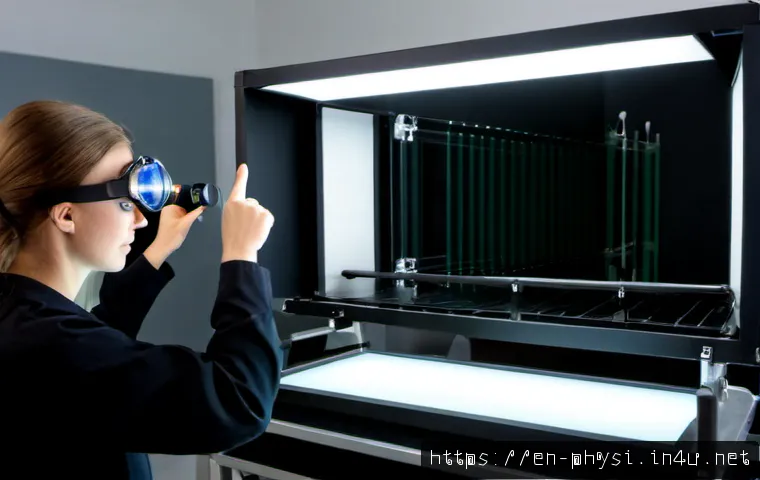
Theory is exciting, but seeing quantum phenomena in the lab brings concepts to life. When I participated in quantum optics experiments, the abstract became tangible—interference patterns, photon entanglement, and measurement effects.
Engaging with experimental setups enhances understanding and sparks creativity in problem-solving. It also highlights the importance of precision and patience in cutting-edge research.
Harnessing Computational Skills for Modern Physics
Programming as a Physics Essential
Learning programming languages like Python or MATLAB was a game-changer for me. They allow you to model complex systems, analyze data, and visualize results efficiently.
Whether simulating particle collisions or solving differential equations numerically, computational skills extend your problem-solving toolkit significantly.
I often found that coding also sharpened my logical thinking, which translated back into theoretical work.
Numerical Methods for Complex Problems
Not all physics problems have neat analytical solutions, which is where numerical methods shine. Techniques like finite element analysis, Monte Carlo simulations, and Runge-Kutta methods enable tackling real-world systems with high complexity.
Early on, I used these methods to study chaotic systems and fluid flow, experiences that deepened my appreciation for computational physics. Getting comfortable with these approaches is essential for research and industry roles alike.
Integrating Data Analysis and Visualization
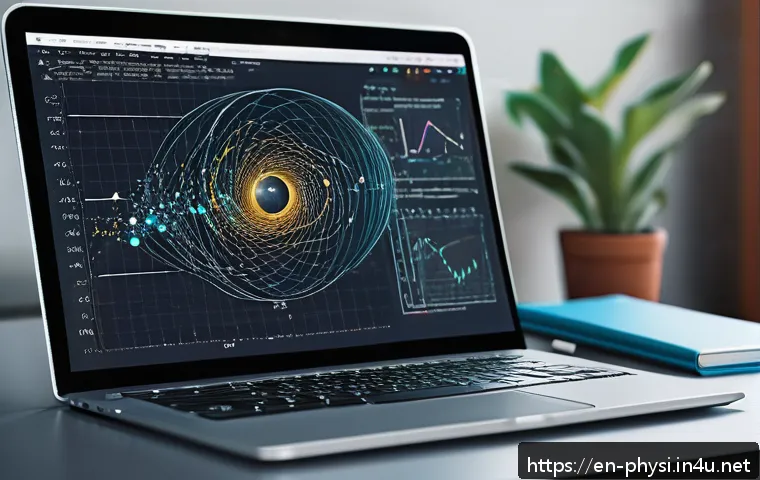
Interpreting data accurately is critical in physics research. I learned that effective visualization—using graphs, heatmaps, or 3D models—not only aids comprehension but also communication of results.
Tools like Matplotlib or Tableau helped me present complex findings clearly to colleagues and in presentations. Developing this skill set boosts your ability to collaborate and make informed decisions based on experimental or simulation data.
Understanding the Cosmos Through Astrophysics
Grasping Celestial Mechanics and Dynamics
Astrophysics captivated me with its blend of classical and modern physics applied on a cosmic scale. Studying orbital mechanics and gravitational interactions helped me appreciate the delicate balance governing planetary and stellar systems.
This knowledge is fundamental for understanding everything from satellite trajectories to galaxy formation. It’s thrilling to connect equations on paper with the vastness of space.
Exploring High-Energy Phenomena
The universe is home to extreme events like supernovae, black holes, and gamma-ray bursts. Delving into these topics introduced me to relativistic physics and particle interactions under extraordinary conditions.
It’s a challenging area that requires integrating quantum field theory and general relativity, but the insights gained are profound. I found that following recent research and simulations kept my curiosity alive and my knowledge current.
Observational Techniques and Instrumentation
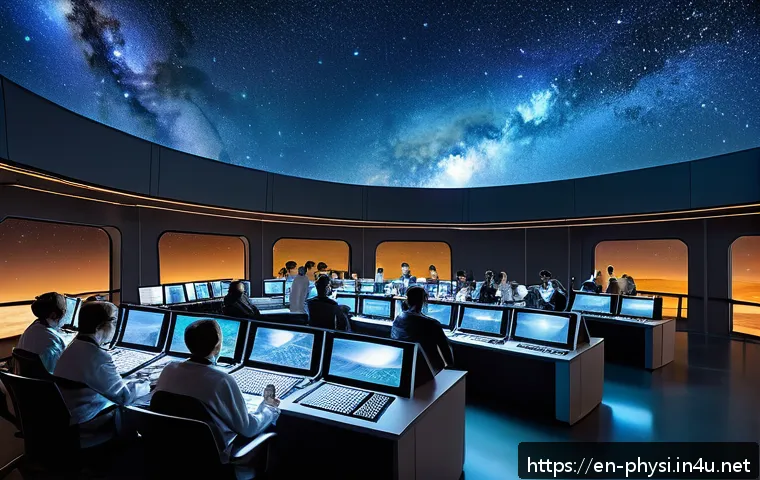
Astrophysics isn’t just theory; it depends heavily on data from telescopes and detectors. Learning about different observational methods—optical, radio, X-ray astronomy—broadened my perspective on how we gather information from distant objects.
Hands-on experience with data reduction and image processing was invaluable, revealing the intricacies behind every stunning space image. This practical knowledge is key for anyone aiming to contribute to astronomical research.
Mastering Experimental Methods and Instrumentation
Precision in Measurement and Data Collection
Accurate measurements are the backbone of experimental physics. Early in my lab work, I realized that understanding error analysis and uncertainty is as important as the data itself.
Techniques like using oscilloscopes, spectrometers, and interferometers require meticulous attention to detail. Developing this precision not only improves results but builds trust in your conclusions, a vital aspect of scientific credibility.
Designing and Troubleshooting Experiments
Experiment design is an art and science combined. I often faced unexpected challenges, like equipment malfunctions or environmental noise, that taught me adaptability and problem-solving.
Learning to refine setups and control variables deepened my experimental intuition. Sharing these experiences with peers also highlighted the collaborative nature of scientific discovery, where teamwork and communication are just as crucial as technical skills.
From Laboratory to Real-World Applications
Bridging lab experiments to practical applications was particularly rewarding. For instance, understanding semiconductor physics led me to explore electronics used in everyday devices.
This transition from theory and controlled experiments to tangible technologies reinforced the impact physics can have beyond academia. It also inspired me to think about how my work could contribute to innovation and industry advancements.
Connecting Theory and Innovation Through Research
Developing Critical Thinking and Curiosity
Research pushes you beyond textbook learning into the unknown. I found that cultivating curiosity and asking “why” and “what if” questions drove my growth.
Analyzing literature, proposing hypotheses, and designing experiments sharpened my analytical skills. This mindset is crucial for staying relevant and contributing original ideas in a field that constantly evolves.
Collaborating Across Disciplines
Modern physics research often intersects with chemistry, biology, and engineering. I’ve seen firsthand how multidisciplinary teams tackle complex problems more effectively.
Embracing diverse perspectives enriches your approach and opens new avenues for innovation. Building communication skills and openness to learning from other fields is essential for thriving in collaborative research environments.
Publishing and Sharing Discoveries
Communicating your findings through papers, presentations, or online platforms is a vital part of the scientific process. Early experiences with peer review and public speaking were nerve-wracking but ultimately empowering.
Sharing your work not only contributes to the scientific community but also builds your professional reputation. Learning to tell your research story clearly and engagingly is a skill that pays dividends throughout your career.
| Core Subject | Key Concepts | Practical Applications |
|---|---|---|
| Mathematics | Calculus, Linear Algebra, Differential Equations | Modeling physical systems, Quantum mechanics, Simulations |
| Classical Physics | Newtonian Mechanics, Electromagnetism, Thermodynamics | Engineering, Energy systems, Electronics |
| Quantum Physics | Wave-Particle Duality, Schrödinger Equation, Quantum Computing | Quantum tech, Cryptography, Fundamental research |
| Computational Physics | Programming, Numerical Methods, Data Visualization | Simulations, Data analysis, Algorithm development |
| Astrophysics | Celestial Mechanics, High-Energy Phenomena, Observational Techniques | Space exploration, Telescope data, Cosmology |
| Experimental Physics | Measurement Techniques, Instrumentation, Error Analysis | Lab research, Product development, Quality control |
| Research Skills | Critical Thinking, Multidisciplinary Collaboration, Scientific Communication | Innovation, Academic publishing, Team projects |
In Conclusion
Mastering physics requires a strong foundation in mathematics, a deep understanding of classical and quantum theories, and hands-on experience with experimental and computational tools. This journey is both challenging and rewarding, as it sharpens your problem-solving skills and opens doors to cutting-edge research and innovation. Embrace curiosity and persistence, and you’ll find yourself well-equipped to explore the fascinating world of physics.
Useful Information to Keep in Mind
1. Consistent practice with mathematical concepts like calculus and linear algebra is essential for grasping complex physics topics.
2. Engaging in both theoretical study and practical experiments deepens your understanding and builds intuition.
3. Developing programming and numerical analysis skills greatly enhances your ability to solve real-world physics problems.
4. Exploring interdisciplinary research broadens your perspective and drives innovation in modern physics.
5. Effective communication of your findings is crucial for collaboration and professional growth in the scientific community.
Key Takeaways
Building a solid mathematical toolkit forms the backbone of physics mastery, enabling you to decode complex phenomena. Grounding yourself in classical physics lays a reliable foundation for more advanced concepts, while diving into quantum mechanics challenges and expands your thinking. Embracing computational skills and experimental techniques connects theory with practice, and cultivating research abilities ensures continuous growth and contribution. Balancing these elements is vital for anyone aspiring to excel in the dynamic field of physics.
Frequently Asked Questions (FAQ) 📖
Q: What foundational subjects should I focus on to build a strong base in physics?
A: To excel in physics, you should prioritize mastering classical mechanics, electromagnetism, quantum mechanics, and thermodynamics. These core areas provide the essential framework for understanding more advanced topics like quantum computing and astrophysics.
Additionally, a solid grasp of mathematics—especially calculus, linear algebra, and differential equations—is crucial since physics relies heavily on mathematical modeling.
From my own experience, diving deep into these subjects early on makes complex concepts more approachable down the line.
Q: How important is programming and computational skills for modern physicists?
A: Programming skills have become indispensable in today’s physics landscape. Whether you’re simulating quantum systems, analyzing astrophysical data, or working on experimental setups, coding languages like Python, C++, or MATLAB streamline your workflow and open up new research possibilities.
Personally, learning to code transformed my approach to problem-solving, allowing me to test theories and process large datasets efficiently. So, investing time in computational skills is definitely a game-changer for anyone serious about physics.
Q: How can I stay updated with the latest developments in fields like quantum computing and astrophysics?
A: Staying current requires a mix of consistent reading and community engagement. Subscribing to reputable journals, following key researchers on social media, and participating in online forums or local physics groups can keep you informed about breakthroughs and emerging trends.
I found that attending conferences and webinars also provides valuable firsthand insights and networking opportunities. Combining these approaches ensures you’re not just passively consuming information but actively integrating new knowledge into your studies and projects.